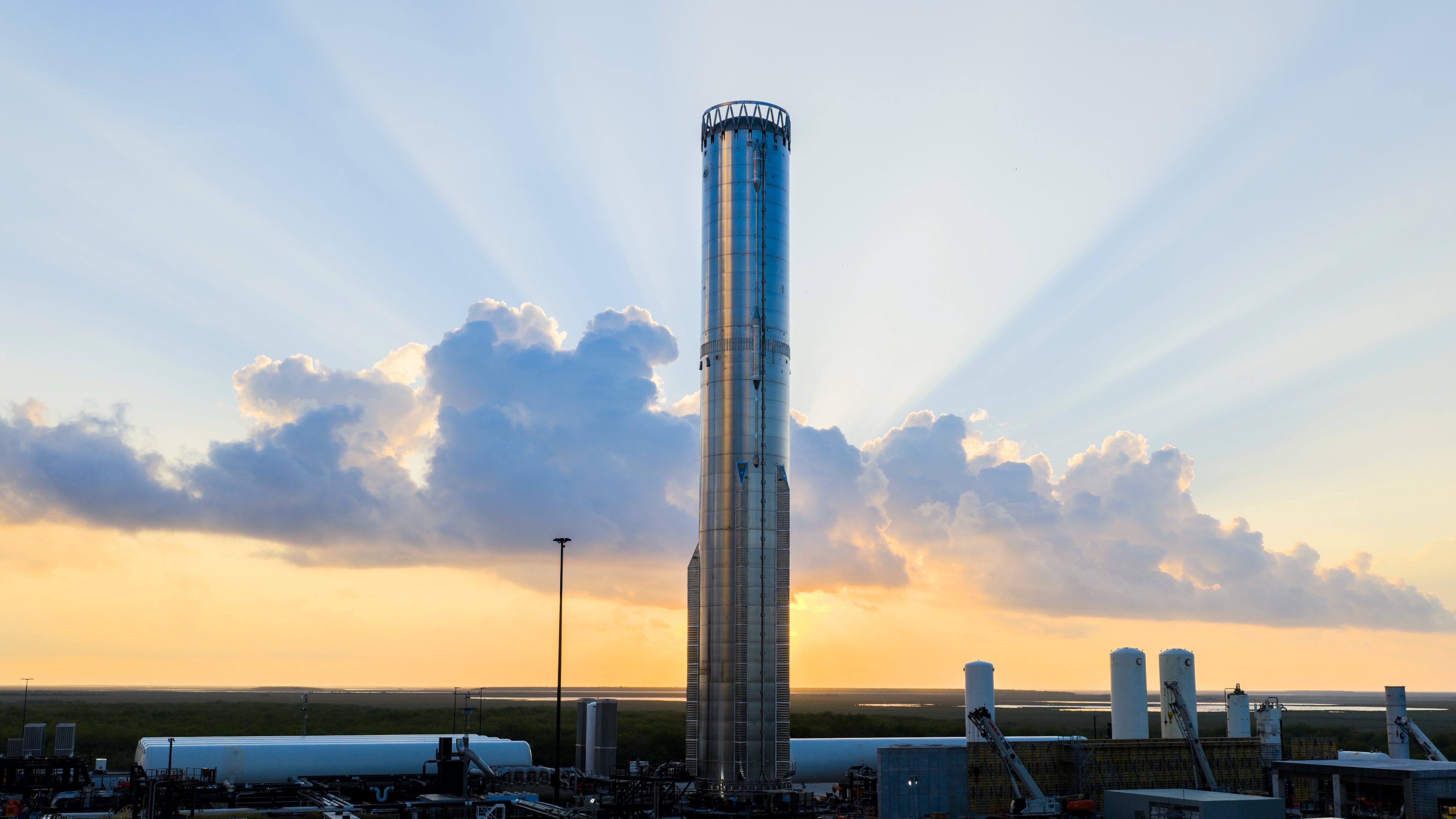
SpaceX Starship Booster Suffers Significant Damage During Pre-Launch Testing

Summary (TL;DR)

A SpaceX Starship first stage booster experienced major damage during a pre-launch test at Massey"s Test Site in South Texas, potentially impacting the company"s ambitious development schedule. The incident occurred on November 21, 2025, and is currently under investigation.

November 22, 2025Hype Rating: 60/100

Image

Photo courtesy of SpaceX

On November 21, 2025, at 4:04 am CT (10:04 UTC), a significant incident occurred during pre-launch testing of SpaceX"s Starship first stage booster at Massey"s Test Site in South Texas. The booster, designated as Booster 18 and being the first of the Starship Version 3 with design fixes and upgrades, suffered substantial damage, although the exact nature and cause of the damage have not been fully disclosed.

From a technical standpoint, the Starship program is pushing the boundaries of aerospace engineering with its methalox propulsion system, which utilizes a combination of methane and oxygen as fuel. This approach is distinct from traditional rocket fuels and is part of SpaceX"s strategy to develop a reusable and efficient launch system. The Raptor engines, powering the Starship, are critical to this effort, with their high specific impulse and thrust-to-weight ratio designed to enable both the ascent and the return of the vehicle.

The context of this incident is multifaceted, involving not just the immediate goals of the Starship program but also its broader implications for space exploration and development. SpaceX plans to utilize the Starship for a variety of missions, including crewed lunar landings as part of NASA"s Artemis Program, scheduled for the second half of 2028, and operational Starlink deployment missions. The ability to demonstrate booster landing and reuse, as well as upper stage tower catch, is crucial for the economic viability and environmental sustainability of these endeavors.

The significance of this event extends beyond SpaceX to the aerospace industry as a whole. As companies and space agencies around the world push towards more advanced and sustainable launch technologies, incidents like these serve as reminders of the challenges and risks involved. They also highlight the importance of rigorous testing and safety protocols in ensuring the success of such ambitious projects. The incident may impact SpaceX"s development timeline, potentially delaying key milestones such as the crewed lunar landing mission. However, it is also an opportunity for the company to apply lessons learned and further refine its technology.

In conclusion, while the damage to the Starship booster during pre-launch testing presents a setback, it is a critical step in the iterative process of developing cutting-edge aerospace technologies. As SpaceX and other entities continue to innovate and push the boundaries of what is possible in space exploration, incidents like these will inevitably occur. The key to success lies in how these challenges are addressed and overcome, ultimately contributing to a safer, more efficient, and sustainable presence in space.

Why It Matters

The recent incident involving the SpaceX Starship booster's significant damage during pre-launch testing has notable implications for long-term human exploration of the Moon, Mars, and deep space. The Starship program is a critical component of NASA's Artemis initiative, aiming to return humans to the lunar surface by 2025 and establish a sustainable presence on the Moon. A delay in the development schedule could have a ripple effect on the entire Artemis timeline, potentially pushing back the planned lunar missions and ultimately impacting the trajectory of human exploration beyond Earth's orbit. Furthermore, the Starship's intended capability to transport both crew and cargo to the Moon and Mars makes it a crucial element in establishing a sustainable presence on these celestial bodies.

From a technological standpoint, the incident highlights the complexities and challenges associated with developing reusable launch systems. The Starship booster's damage during testing underscores the need for rigorous evaluation and validation of new propulsion and reusability technologies. As the space industry continues to push the boundaries of innovation, incidents like this serve as reminders of the importance of thorough testing and iteration in ensuring the reliability and safety of these systems. The outcome of this investigation will likely inform future design and testing protocols, not only for SpaceX but also for other companies pursuing similar reusability goals. This, in turn, will have a direct impact on the advancement of spacecraft and propulsion technology, as companies strive to develop more efficient, cost-effective, and reliable launch systems.

The economic and commercial implications of this incident should not be overlooked. As one of the leading private space companies, SpaceX's development schedule and technological advancements have a significant impact on the broader commercial space industry. A delay in the Starship program could affect the company's ability to meet contractual obligations, potentially altering the competitive landscape of the launch services market. This, in turn, may influence the investment strategies of venture capital firms and other stakeholders, as they reassess the risks and opportunities associated with space technology development. Moreover, the incident may prompt a reevaluation of regulatory frameworks governing private space activities, particularly with regard to safety standards and testing protocols.

In terms of mission architecture and infrastructure, the Starship program's setback may lead to a reexamination of the current launch vehicle manifest for upcoming NASA missions. Alternative launch options, such as the Space Launch System (SLS) or other commercial heavy-lift vehicles, may need to be considered to ensure the continuity of planned spaceflight operations. This could result in changes to the mission design, payload configurations, and even the selection of crew members, as NASA adapts to the new development timeline. The incident serves as a reminder of the intricate relationships between launch vehicle development, mission planning, and infrastructure investments, highlighting the need for flexibility and adaptability in the face of unforeseen challenges.

The investigation into the Starship booster's damage will likely provide valuable insights into the root causes of the incident, informing corrective actions to prevent similar occurrences in the future. As the space industry continues to evolve, incidents like this will play a crucial role in shaping the development of new technologies, influencing investment decisions, and refining regulatory frameworks. By examining the implications of this event, we can better understand the complexities and challenges associated with advancing space exploration and development, ultimately contributing to a more resilient and sustainable presence in space.

Long-term Outlook

Long-term Outlook

The recent incident involving the SpaceX Starship booster during pre-launch testing at Massey's Test Site in South Texas introduces significant uncertainty into the company's development schedule. Historically, similar incidents have led to delays and revisions in test plans, as was seen with the Space Shuttle program and more recently with the NASA Artemis program's own setbacks. Given this context, it is prudent to anticipate potential delays in the Starship development timeline. The upcoming milestones, including the uncrewed mission to Mars and the crewed lunar missions under the Artemis Program, may be pushed back as a result of this incident.

The technical risks and challenges associated with developing a reusable rocket system like the Starship are substantial. Achieving reliability and consistency in launch performance requires rigorous testing and validation, processes that cannot be rushed without compromising safety and efficacy. The damage to the booster during pre-launch testing underscores these challenges, highlighting the complexities involved in scaling up rocket technology for both orbital deployments, such as Starlink missions, and deep space exploration. While SpaceX has demonstrated remarkable resilience and innovation in overcoming technical hurdles, the path forward will undoubtedly involve careful analysis of the failure, redesign or modification of affected components, and potentially a recalibration of testing protocols.

Looking ahead, realistic expectations must be tempered by an understanding of aerospace engineering constraints and historical precedents. Programs of this scale and ambition often encounter setbacks, and managing these challenges is as much about resilience and adaptability as it is about technological prowess. The development of the Starship, with its ambitious goals of enabling both lunar and Mars missions, fits within a broader narrative of space exploration that has seen numerous delays, budget overruns, and technological hurdles. However, history also shows that such setbacks can provide valuable learning opportunities, leading to more robust and reliable systems in the long run.

As investigations into the incident continue and SpaceX works towards resolving the issues at hand, it's essential to maintain a forward-looking yet cautious perspective. The company's track record of innovation and its commitment to pushing the boundaries of space technology are undeniable. Nonetheless, acknowledging the uncertainties and potential challenges inherent in such complex engineering endeavors is crucial for setting realistic expectations about future milestones and timelines. By doing so, we can better understand the long-term implications of this incident on SpaceX's development schedule and the broader landscape of space exploration.

Space Hype Rating: 60/100

Notable progress with meaningful contributions to space exploration

Related Articles