Blue Origin Enhances New Glenn Rocket with Upgrades for Super-Heavy Lift Capability

Summary (TL;DR)

Blue Origin has announced significant upgrades to its New Glenn rocket, introducing a new variant called the New Glenn 9×4, which boasts enhanced super-heavy lift capability and the ability to carry over 70 metric tons to low-Earth orbit. This development marks a crucial step forward in the company's pursuit of advancing space technology and exploration.

November 22, 2025Hype Rating: 60/100

Image

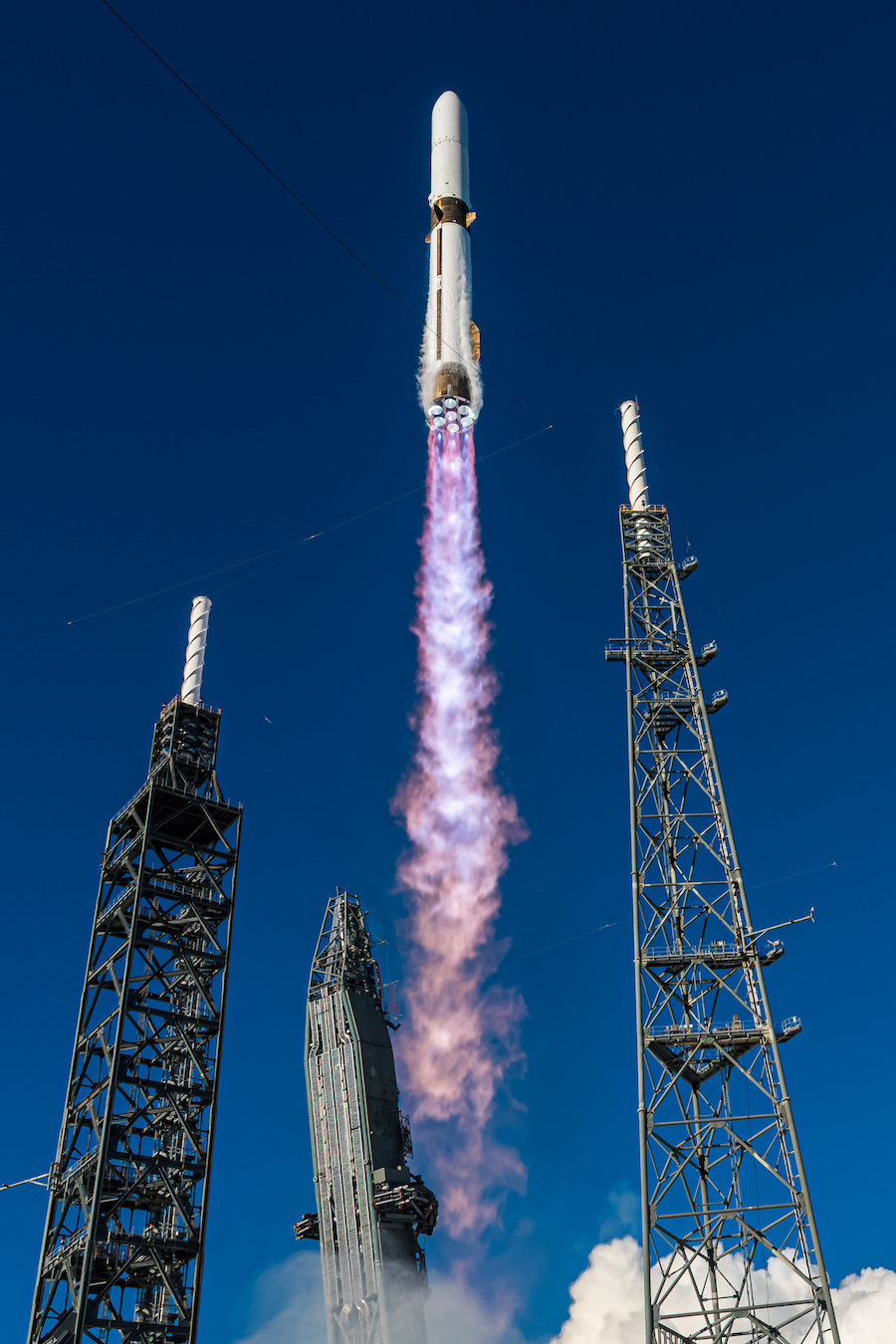
Photo courtesy of Blue Origin, LLC

Blue Origin recently unveiled substantial upgrades to its New Glenn rocket, a move that underscores the company's commitment to pushing the boundaries of space exploration and technology. The introduction of the New Glenn 9×4 variant is particularly noteworthy, as it features an increased number of main engines and is designed to achieve super-heavy lift capability, significantly expanding the rocket's payload capacity.

From a technical standpoint, the New Glenn 9×4 will be equipped with a larger 8.7-meter fairing, allowing for the accommodation of larger payloads. The rocket's enhanced capabilities are made possible by its BE-4 engines, which provide the necessary propulsion for lifting heavy payloads into orbit. Furthermore, Blue Origin is working on the development of a full-scale deployable aerobrake, a device that will play a critical role in slowing down payloads returning to Earth from space, including those destined for Mars.

To understand the significance of these upgrades, it's essential to consider the context and background of the New Glenn rocket program. Initially announced with a focus on commercial satellite launches and human spaceflight, the New Glenn has undergone several iterations as Blue Origin continues to refine its design and capabilities. The collaboration between Blue Origin and NASA has been instrumental in driving innovation and pushing the boundaries of what is possible in space exploration.

The ability of the New Glenn 9×4 to carry over 70 metric tons to low-Earth orbit places it in a unique position within the aerospace industry, offering unparalleled lift capability that will be crucial for future deep space missions. This includes potential applications such as trans-lunar injection maneuvers and the deployment of satellites into geosynchronous orbit. The development of the New Glenn 9×4 also highlights Blue Origin's long-term vision for space exploration, including its ambitions for lunar and Mars missions.

The implications of these upgrades are far-reaching, with potential impacts on various aspects of space exploration and development. As companies like Blue Origin continue to push the boundaries of what is possible, we can expect significant advancements in our ability to access and utilize space. The debut of the New Glenn 9×4, slated for as early as 2027, will be a pivotal moment in this journey, marking a new era in super-heavy lift capability and paving the way for more ambitious space missions in the years to come.

Why It Matters

The enhancement of Blue Origin's New Glenn rocket with super-heavy lift capability marks a significant milestone in the pursuit of long-term human exploration of space. The ability to carry over 70 metric tons to low-Earth orbit enables the development of more complex and sustainable missions to the Moon, Mars, and beyond. This increased payload capacity will allow for the transportation of larger and more advanced spacecraft, including those necessary for establishing permanent human settlements on the lunar and Martian surfaces. Furthermore, the New Glenn 9×4's enhanced capabilities will facilitate the deployment of more extensive and sophisticated infrastructure, such as lunar or Mars-orbiting fuel depots, which are critical for supporting deep space missions.

The technological advancements embodied in the New Glenn 9×4 also have profound implications for spacecraft and propulsion technology. The development of a super-heavy lift rocket requires significant advances in materials science, propulsion systems, and structural engineering. These innovations will likely trickle down to other areas of space technology, driving progress in reusability, efficiency, and overall system performance. Moreover, the experience gained from designing and operating a rocket of this scale will inform and accelerate the development of future launch vehicles, potentially leading to breakthroughs in areas like nuclear propulsion or advanced ion engines. As the space industry continues to push the boundaries of what is possible, advancements like those represented by the New Glenn 9×4 will play a crucial role in driving progress.

The economic and commercial implications of this development are also noteworthy. With its enhanced capabilities, Blue Origin is well-positioned to compete for lucrative government contracts and commercial launch services, potentially disrupting the existing market dynamics. The ability to offer super-heavy lift capabilities at a competitive price point could attract new customers, such as NASA or the European Space Agency, which require significant payload capacity for their deep space missions. Additionally, the New Glenn 9×4's reusability features will likely reduce launch costs over time, making it an attractive option for commercial satellite operators and other private space companies. As the demand for launch services continues to grow, Blue Origin's upgraded rocket will be well-positioned to capitalize on this trend, driving growth and revenue for the company.

In terms of mission architecture and infrastructure, the New Glenn 9×4's enhanced capabilities will enable more efficient and sustainable mission designs. For example, the ability to carry larger payloads to low-Earth orbit will allow for the deployment of more extensive satellite constellations, which can provide global coverage and enable new applications like high-speed internet or Earth observation. Furthermore, the rocket's super-heavy lift capability will facilitate the construction of larger and more complex space-based infrastructure, such as lunar or Mars-orbiting space stations, which are critical for supporting deep space missions. As the space industry continues to evolve, the New Glenn 9×4 will play a key role in enabling the development of more ambitious and sustainable mission architectures.

The geopolitical implications of this development should not be overlooked. As private companies like Blue Origin continue to push the boundaries of space technology, they are increasingly driving the global space agenda. The development of super-heavy lift capabilities by a private company like Blue Origin underscores the shifting balance of power in the space industry, where traditional government-led programs are being complemented and sometimes surpassed by private initiatives. This trend is likely to continue, with significant implications for global space governance, regulatory frameworks, and international cooperation. As the space industry becomes increasingly commercialized and privatized, developments like the New Glenn 9×4 will play a critical role in shaping the future of space exploration and development.

Long-term Outlook

Long-term Outlook

The introduction of the New Glenn 9×4 variant marks a significant milestone in Blue Origin's pursuit of advancing space technology and exploration. Looking ahead, the company is likely to focus on testing and validating the new upgrades, with a series of flight tests expected to take place over the next 2-3 years. Assuming successful test flights, the New Glenn 9×4 could enter commercial service by the mid-2020s, positioning Blue Origin as a major player in the super-heavy lift market. However, it's essential to acknowledge the uncertainties and potential challenges associated with developing and operating a complex launch system. Delays or setbacks during testing and validation phases are not uncommon in the aerospace industry, and Blue Origin will need to navigate these risks carefully.

From a technical perspective, the New Glenn 9×4's enhanced super-heavy lift capability will likely be subject to rigorous testing and evaluation to ensure reliability and performance. The company will need to demonstrate its ability to consistently deliver payloads of over 70 metric tons to low-Earth orbit, which will require significant investments in infrastructure, personnel, and processes. Additionally, the development of new technologies and systems, such as advanced propulsion systems or guidance and navigation software, may introduce technical risks and challenges that could impact the program's timeline and budget. Historically, similar programs have faced significant delays and cost overruns due to unforeseen technical issues, highlighting the importance of careful planning, testing, and risk management.

In terms of potential dependencies, Blue Origin's success with the New Glenn 9×4 will likely depend on a range of factors, including market demand for super-heavy lift services, competition from other launch providers, and regulatory frameworks governing space activities. The company will need to navigate these external factors while also managing internal risks, such as supply chain disruptions or talent acquisition and retention challenges. Despite these uncertainties, Blue Origin's track record in developing and operating the New Glenn rocket suggests that the company has a solid foundation for success. By drawing on historical lessons from similar programs, such as NASA's Space Shuttle or Ariane 5 developments, Blue Origin can inform its approach to managing technical risks, schedule dependencies, and budget constraints.

Realistically, the development and operation of the New Glenn 9×4 will be shaped by a combination of technical, programmatic, and market factors. While Blue Origin has made significant progress in advancing space technology, the company will need to maintain a disciplined approach to engineering, testing, and operations to

Space Hype Rating: 60/100

Notable progress with meaningful contributions to space exploration

Related Articles