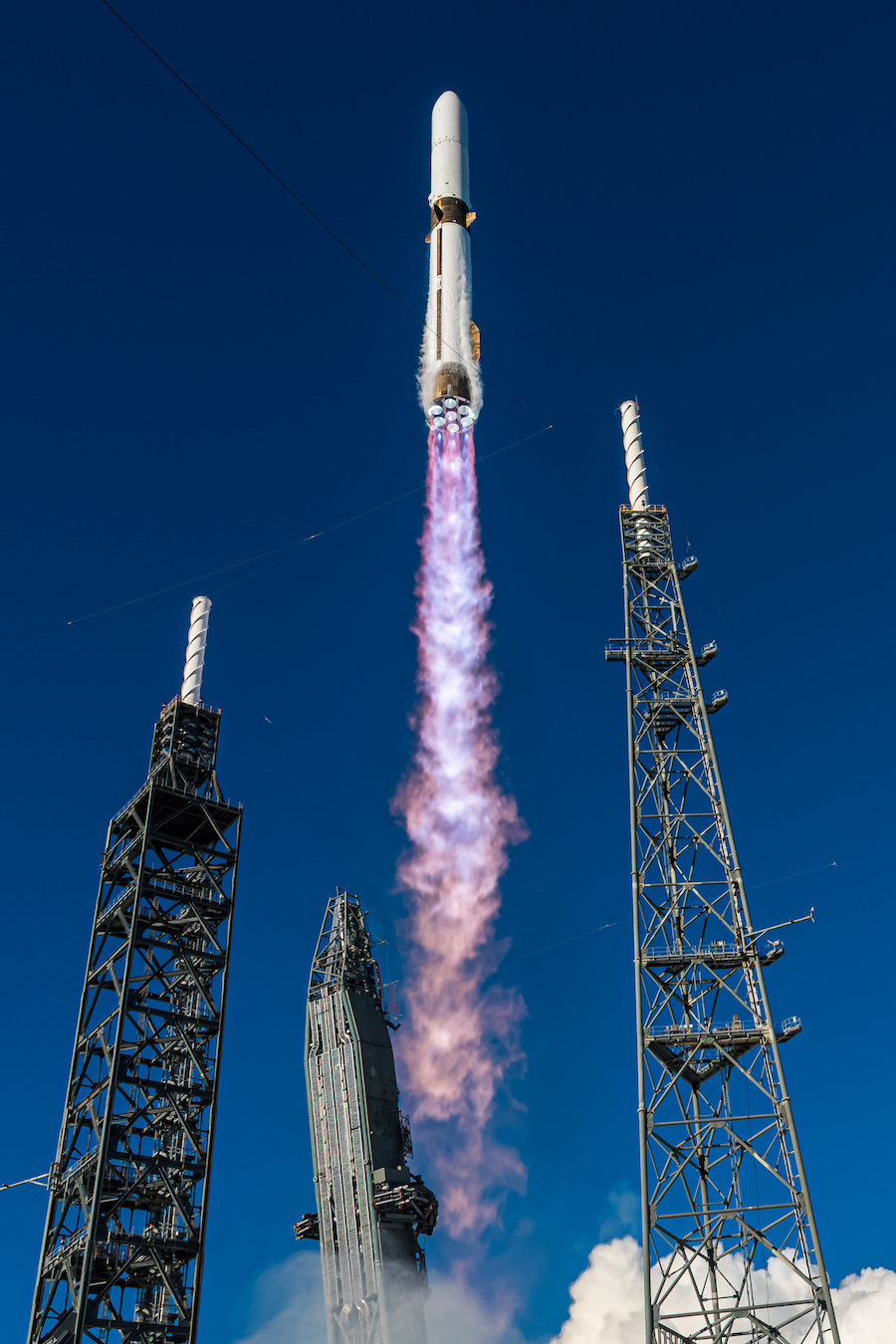
Photo courtesy of Blue Origin, LLC
Blue Origin has made history by landing its New Glenn rocket on a floating platform in the Atlantic Ocean, following a successful launch from Cape Canaveral Space Force Station in Florida. The launch, which took place in November 2025, was initially delayed due to poor weather conditions and a solar storm, but ultimately resulted in a flawless execution of the mission.From a technical standpoint, the New Glenn rocket is an orbital-class vehicle powered by liquified natural gas and liquid oxygen. The rocket carried two NASA science probes on a two-year journey to Mars, demonstrating its capabilities as a reliable and efficient launch system. One of the key technologies that enabled this achievement is propulsive landing, which involves using the rocket"s engines to slow down and land vertically on a platform. This technique requires precise control and significant amounts of fuel, making it a challenging but crucial aspect of reusable launch systems.
To understand the significance of this achievement, it is essential to consider the context of the aerospace industry. Traditionally, launch vehicles have been expendable, with each mission requiring a new rocket. However, with the advent of reusable launch systems, companies like Blue Origin and SpaceX are working towards reducing the cost of access to space. By recovering and reusing orbital-class rocket boosters, these companies can significantly decrease the cost of launches, making space travel more accessible and affordable.
The successful landing of the New Glenn rocket is also notable because it marks the first time a company other than SpaceX has achieved a propulsive landing of an orbital-class rocket booster. This demonstrates that Blue Origin has developed the necessary technologies and expertise to compete with established players in the industry. Furthermore, the company plans to reuse the same booster next year, which will be a critical test of its reusability and reliability.
The implications of this achievement extend beyond Blue Origin, as it has the potential to impact the broader aerospace industry. With multiple companies now capable of recovering and reusing orbital-class rocket boosters, the cost of launches is likely to decrease, enabling more frequent and ambitious space missions. Additionally, the development of reusable launch systems will drive innovation and investment in the industry, leading to new technologies and opportunities for space exploration and development.
In conclusion, Blue Origin"s successful offshore landing of the New Glenn rocket is a significant technical milestone that demonstrates the company"s capabilities in recovering orbital-class rocket boosters. This achievement has important implications for the aerospace industry, as it highlights the potential for reusable launch systems to reduce the cost of access to space and enable more frequent and ambitious space missions.